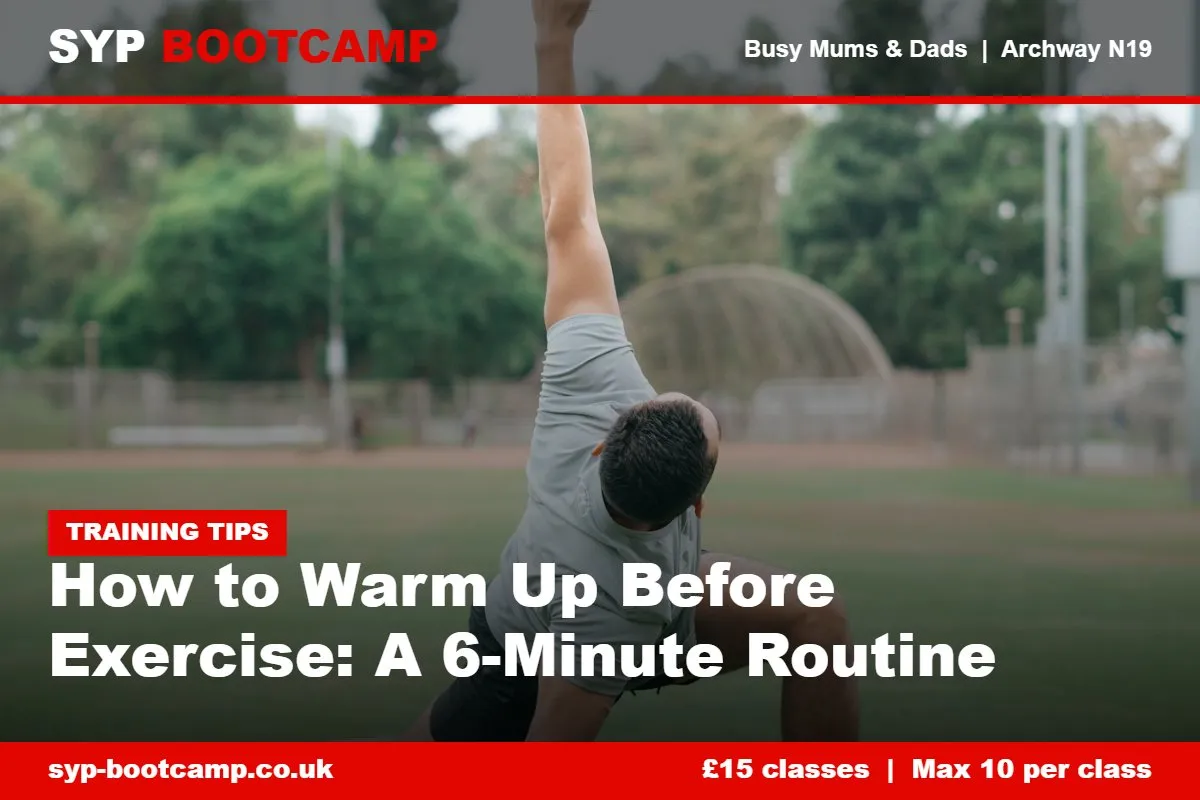
How to Warm Up Before Exercise: A 6-Minute Routine
When you only have 30 minutes to train before the school pick-up, skipping the warm-up feels like a smart shortcut. It is not. A few minutes of easy movement is what lets you get the most out of the rest of your session, and it helps your body feel ready instead of stiff. In this guide I explain why you should warm up before exercise, how long it needs to take, and give you a simple routine you can follow in your living room today.
Why warm up before exercise?
The NHS puts it simply: warm up properly before exercising to prevent injury and make your workouts more effective (NHS: how to warm up before exercising). In practice, a good warm-up does three things:
- Raises your temperature and heart rate gradually, so the hard part of the workout does not come as a shock.
- Moves your joints through the range you are about to use, so squats, lunges and presses feel smoother.
- Switches your brain on. After a day of emails or toddler negotiations, it gives you a minute to focus.
For tired parents, there is a fourth benefit. The warm-up tells you how your body is today. If something feels off, you can choose easier versions in the main session.
How long should a warm-up be?
The NHS warm-up routine takes at least 6 minutes, and you can make it longer if you want. That is a good guide for most sessions. If you are doing something more intense, like intervals or heavier lifting, add a few more minutes and some lighter practice sets of your first exercise.
The NHS-style basic warm-up (6 minutes)
This is based on the routine on the NHS page linked above. Follow these steps in order:
- March on the spot for 3 minutes. Start gently and swing your arms. Gradually lift your knees a little higher.
- Heel digs for 60 seconds. Tap one heel forward on the floor, then the other, aiming for about 60 in a minute. Punch your arms forward if you like.
- Knee lifts for 30 seconds. Lift one knee towards your hands, then the other, aiming for about 30.
- Shoulder rolls: 2 sets of 10. Roll your shoulders up, back and down, slowly.
- Knee bends: 10 reps. Feet hip width apart, bend your knees slightly as if starting a squat, then straighten. Keep it small and comfortable.
Add-ons before a strength or bootcamp session
After the basics, I like to add a few moves that prepare you for the main exercises. Do 5 to 8 slow reps of each:
- Hip hinges: hands on hips, push your hips back with a flat back, then stand tall. This preps deadlifts and kettlebell work.
- Bodyweight squats to a chair: slow and controlled. See my guide on how to squat properly for cues.
- Reverse lunges, holding a wall: step back, lower a little, step in. Alternate legs.
- Arm circles: small, then bigger, forwards and backwards.
- Wall push-ups: a gentle way to warm up the chest and shoulders.
- Cat-cow on hands and knees: slowly round and then gently arch your back to loosen your spine.
Easier and harder options
- Easier: do every move seated or holding a chair, keep the ranges small, and spend longer on marching. Good for days when you are very tired or coming back after a long break.
- Harder: swap marching for light jogging on the spot or skipping, add a set of 5 light kettlebell deadlifts, and finish with 20 seconds of fast feet before your main workout.
Warm-up mistakes I see most
- Long static stretches at the start. Holding a stretch for ages before training does not prepare you to move. Keep the warm-up moving and save longer stretches for afterwards if you enjoy them.
- Going too hard too soon. A warm-up should leave you warm, not wiped out.
- Skipping it on cold mornings. In winter, you usually need a little longer.
- Forgetting to cool down. A few minutes of easy walking at the end helps your breathing settle.
A warm-up is not a fix for pain. If a joint hurts during the warm-up, stop that movement, and see your GP or a physio if the pain is sharp, lasting or worrying. If you are still sore from your last session, my guide to muscle soreness after exercise explains what is normal.
Where a small-group class fits
Every SYP Bootcamp class in Archway starts with a proper warm-up, built around what we are doing that day. With a maximum of 10 people, I can see who needs an easier start and who is ready to go. Sessions are 45 minutes, £15, and all levels are welcome. See this week’s class times on the booking page.
FAQs
Is walking a good warm-up?
Brisk walking is a good start because it gently raises your heart rate. Add a few movements for the joints you are about to use, like squats or arm circles, before harder exercise.
Should I stretch before or after exercise?
Before exercise, keep it moving: marching, knee lifts, shoulder rolls and gentle squats. If you like longer held stretches, they generally fit better after your workout.
Do I need to warm up for a home workout?
Yes. A short home session still deserves a few minutes of warm-up. Even 5 to 6 minutes makes the main part feel smoother.
Want a session where the warm-up, workout and cool-down are all planned for you? Book my £15 class or WhatsApp me on 07301 512215. Prefer to train 1-1 with a partner or friend? See partner personal training in Archway.
About the author
Artem Olekhnovych is a personal trainer in Archway and the founder of SYP Fitness and SYP Bootcamp. He has coached clients in Archway, Highgate and across North London for over 10 years, and runs small-group bootcamp classes for busy mums and dads. Read reviews from his 1-1 clients.
